Tell me who you are, without telling me who you are

Jaima Zahin
Software Developer
The Cryptographic Magic of Proving Everything by Revealing Nothing
The screen was almost entirely black, except for a blinking cursor and a single instruction that seemed deceptively simple: Authenticate to Upload. The decentralized secure drop was waiting.
I was sitting in a crowded coffee shop, about to transfer a multi-gigabyte dataset exposing a synchronized deepfake campaign. I needed to prove to the investigative syndicate’s server that I was a certified digital forensics researcher before it would accept the payload.
The general way of authentication would expect me to log in with an email, a username, or an institutional ID; leaving a digital fingerprint that could easily be traced back to my exact IP and identity. But that is something I could not risk to expose. I needed to tell who I am without telling who I am. I provided no password or ID. Instead, my terminal executed a hidden authentication protocol. A progress bar flashed, and the server responded: Access Granted. It did not know who I was, only that I belonged there.
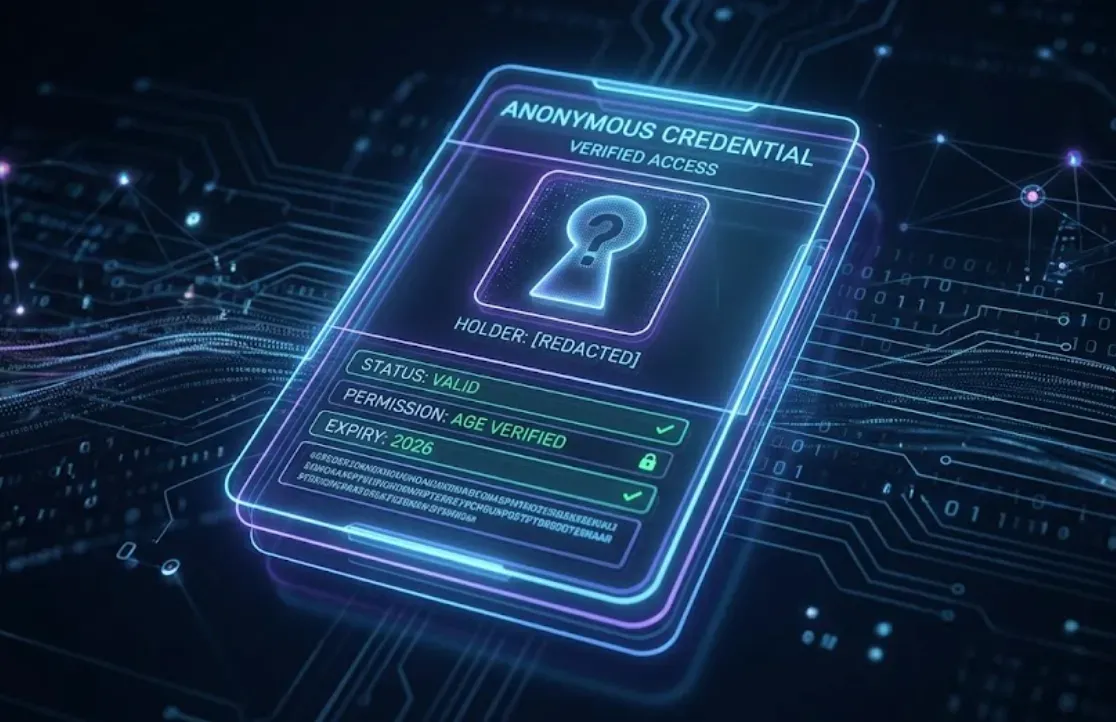
The Architecture of Anonymity: Anonymous Credential
For decades, the digital world operated on a flawed premise: to prove a single attribute, you must reveal your entire identity. If you want to access a restricted network, you hand over your email, institutional ID, or even a government-issued document. Every authentication leaves behind another breadcrumb, another piece of your digital identity that can be stored, linked, analyzed, or leaked.
Anonymous credentials were designed to challenge this assumption. Instead of repeatedly exposing your identity, a trusted authority issues you a cryptographically signed digital credential. Think of it as a passport that lives securely in your digital wallet. The credential contains multiple attributes about you, but unlike a physical ID card, it doesn't force you to reveal all of them every time you use it.
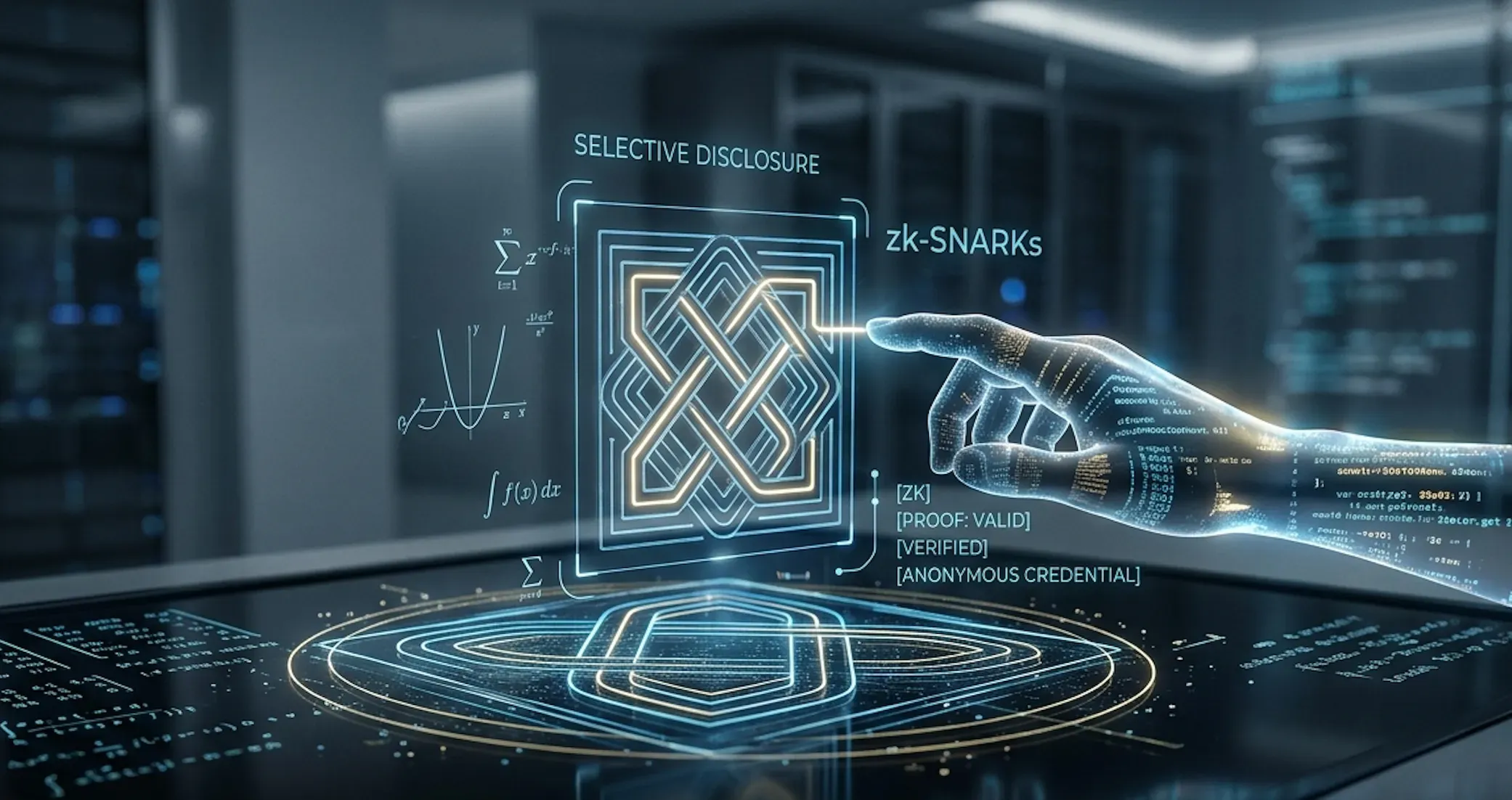
This is where selective disclosure comes in. Powered by cryptographic signature schemes such as BBS+ signatures, anonymous credentials allow you to reveal only the specific claim required by the verifier.
More importantly, these credentials are unlinkable. To every verifier, each presentation appears as an entirely fresh interaction, making it virtually impossible to correlate your activities across different services. In a world where personal data has become currency, anonymous credentials restore something we've slowly lost online: the ability to prove our legitimacy without surrendering our identity.
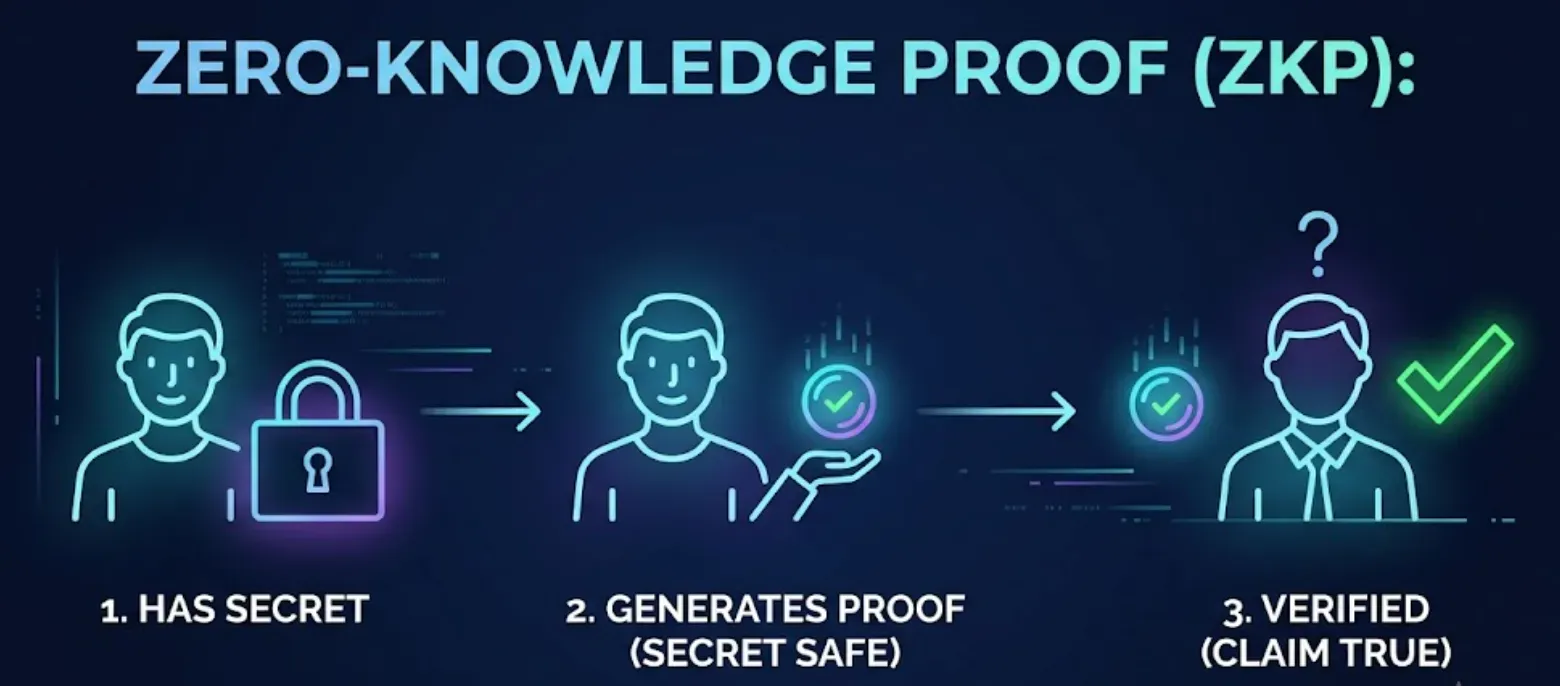
The Engine: Zero-Knowledge Proofs
To make this hidden authentication work without a centralized database constantly checking your ID, the architecture relies on a Zero-Knowledge Proof (ZKP). Think of it like proving you know the way through a complex, deadly maze. Instead of drawing the path for the server (which would give away the secret), you simply emerge at the exit. You prove you know the solution without ever revealing the steps you took to get there. Under the hood, this is powered by algorithms like zk-SNARKs (Zero-Knowledge Succinct Non-Interactive Arguments of Knowledge).
When my terminal pinged the drop-server, it did not send my forensic certification or my name. Instead, it ran a complex polynomial equation locally. It took my private data, combined it with a mathematical challenge from the server, and generated a tiny, unforgeable proof. The server verified this proof in milliseconds. If the math checked out, the equation yielded a True. If I was an imposter, the equation would break, returning a False. No private keys were transmitted across the network. No linked pseudonyms could be traced back to my real-world identity.
The Trustless Horizon
We are moving toward an internet where privacy is not the opposite of security, but the foundation of it. Whether you are a researcher protecting your anonymity, an engineer deploying smart contracts without exposing your transaction history, or a system verifying authentic media in an age of deepfakes, the mandate is the same. We finally have the mathematics to participate in a trustless world without sacrificing ourselves to the data brokers.
So, tell me who you are, without telling me who you are. If you're exploring secure, scalable, and user-centric technologies for your organization, we'd love to be part of that conversation. Explore what's possible at ledgercross.com.