macOS vs Windows vs Linux: Which OS Actually Wins in 2026?

Taharat Jabir
Software Developer
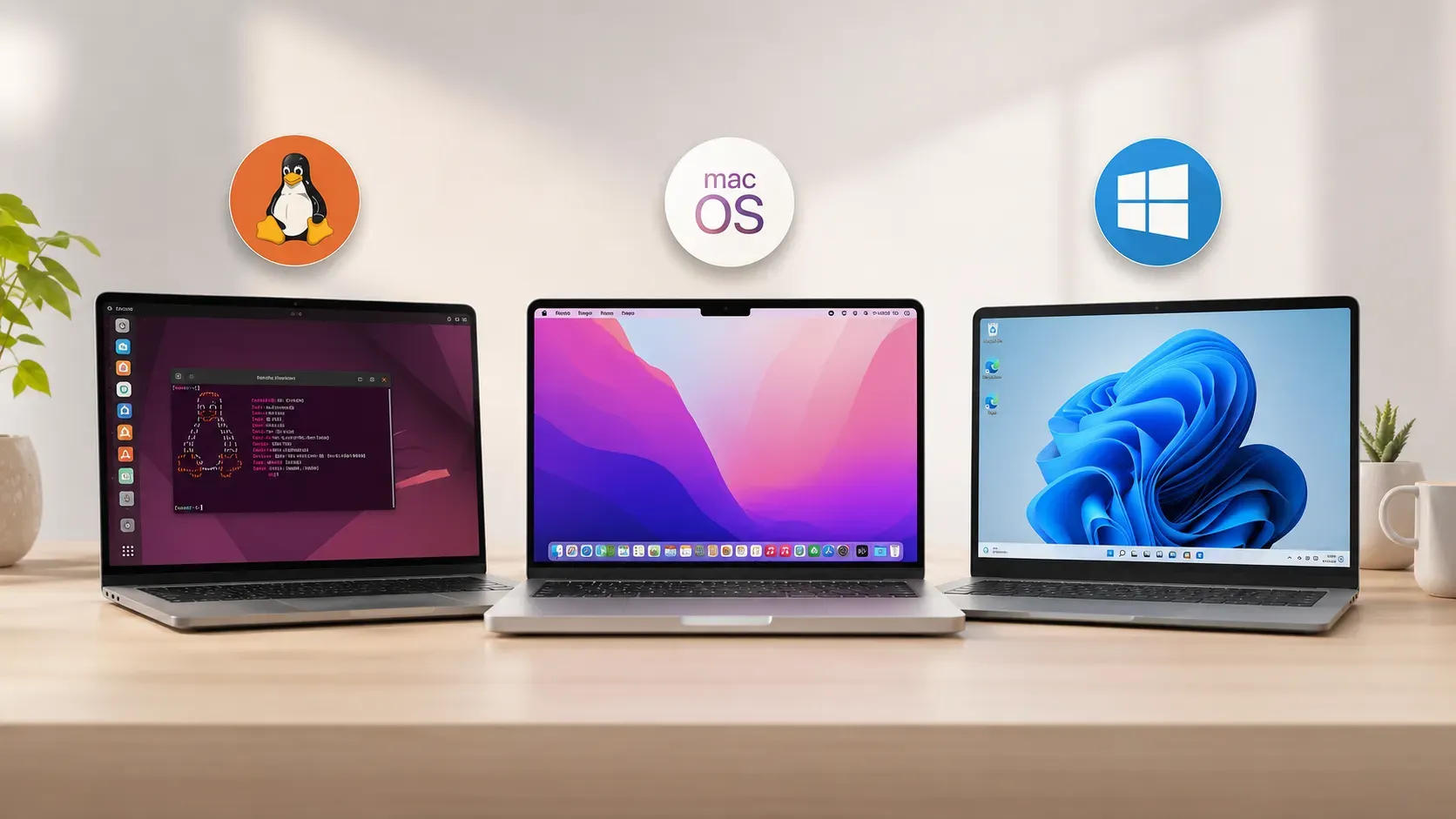
Every few years, someone starts this argument. Every time, nobody wins. Let's do it anyway.
Whether you're a developer, a designer, a student, or just someone who spends too much time staring at a screen, your operating system is the foundation of your entire digital life. And choosing one feels less like a technical decision and more like joining a religion. You don't just pick an OS. You pick a personality.So let's tell the story of all three, the good, the frustrating, and the absolutely unhinged.
Windows: the one everyone has, and half of everyone complains about
Imagine it's 8:58 AM. You have a meeting in two minutes. You open your laptop and Windows greets you with the warmest possible message: "Updates are being installed. Please do not turn off your computer. 1 of 47."That is the Windows experience, perfectly distilled.
Windows runs on about 72% of the world's desktops, which means it is, by every statistical measure, the world's most used operating system. It works with virtually every piece of software ever made. It runs every game. Your office uses it, your school uses it, your bank's ATM runs a version of it from 2009. It is everywhere, and that ubiquity is both its greatest strength and if you ask anyone who's spent a Saturday afternoon cleaning out bloatware, its most exhausting quality. For workplace productivity, Windows is the path of least resistance. Microsoft 365 runs natively. Teams is integrated everywhere. IT departments know it inside out. It's not glamorous, but it keeps the lights on, and on most days, it earns that reputation. On the other days, you're Googling why your taskbar disappeared after the last update.
The privacy conversation around Windows is also real, it collects a notable amount of telemetry data by default, and not everyone is comfortable with that. But most people click "Accept" and move on, because that's what most people do.
macOS: the premium OS that makes you feel things
There is a version of events where you spend $2,500 on a MacBook, and it is the best decision you ever make. The performance on Apple's Silicon chips, M3, M4, is legitimately stunning. The battery lasts all day. The trackpad is the best trackpad on any laptop on earth, and that is not an opinion, that is a fact that even Windows users admit quietly when no one is around. The screen is gorgeous. The software is stable. The whole thing just feels like it was made by people who cared about the details. macOS is Unix-based under the hood, which means developers feel right at home, the terminal works beautifully, package managers like Homebrew slot in cleanly, and the environment is friendly to the kind of work that actually matters. For creative professionals, video editors running Final Cut Pro, musicians on Logic Pro, designers living in Figma, macOS delivers a workflow that feels genuinely frictionless. And then there's the other side of the story.
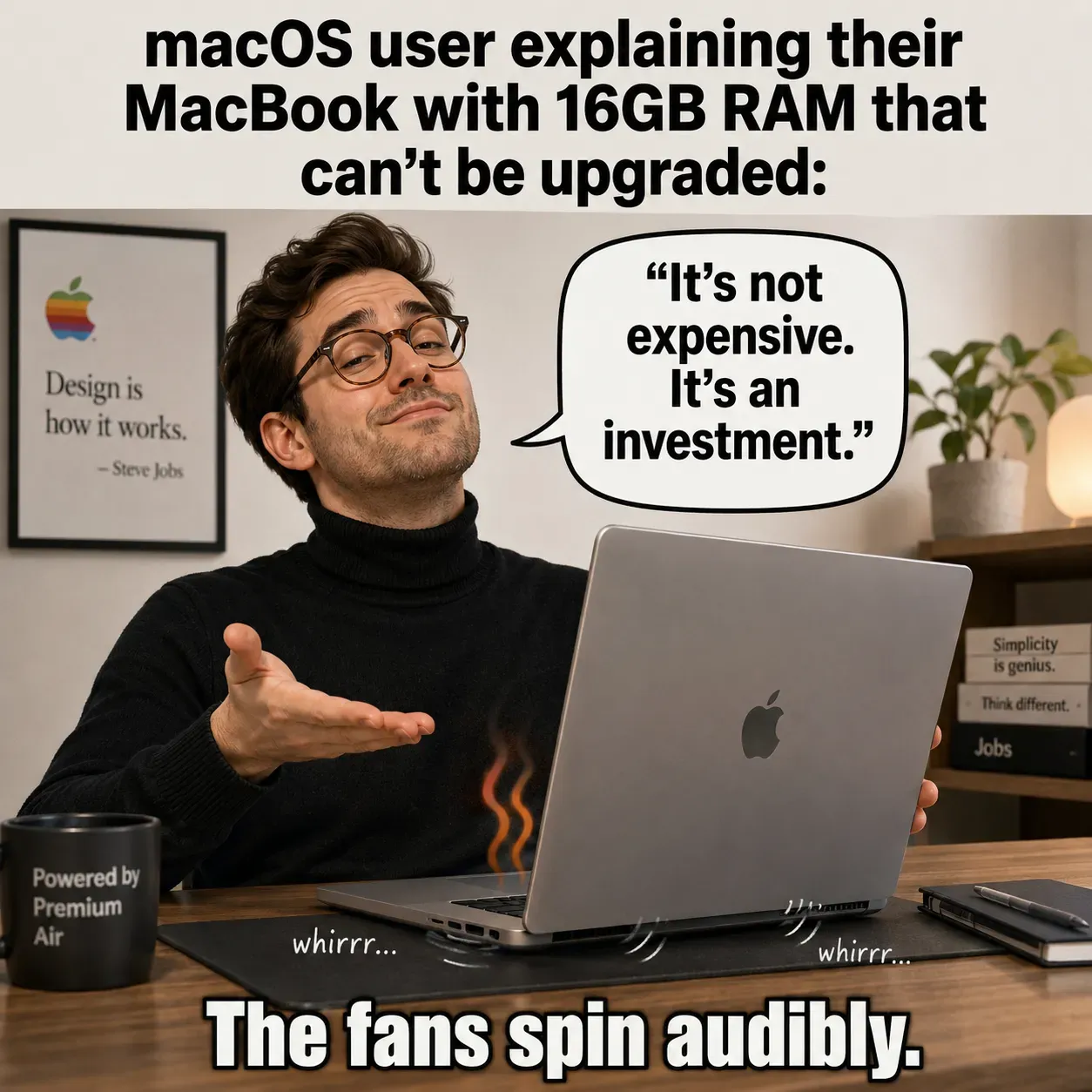
That $2,500 MacBook comes with soldered RAM and non-expandable storage. What you configure at checkout is what you live with forever, no upgrades, no swaps, no second chances. Apple controls what runs on the platform, how it runs, and what you're allowed to do with the hardware you technically own. Repair it yourself and you void the warranty. Take it to a third-party shop and you might void it anyway. Take it to an Apple Store and bring a second mortgage.
None of this stops people from wanting one. If anything, the demand keeps growing, because for all its restrictions, macOS delivers an experience that is genuinely difficult to argue with. People don't just buy MacBooks. They want to be seen with them, which is a different thing entirely, and Apple knows it.
Linux: free, powerful, and not for the faint of heart, but maybe it should be
Here's a fact that surprises people: Linux runs the internet. Web servers, supercomputers, Android phones, the Mars rovers, possibly your smart fridge, Linux is everywhere behind the scenes. On the desktop, though, it has always been the underdog. Loved fiercely by those who use it and quietly ignored by most everyone else.
That's slowly changing, and it's worth understanding why.Linux is completely free and open source. There's no telemetry collecting your habits in the background, no forced updates interrupting your afternoon, no bloatware preinstalled by the manufacturer. It's fast, genuinely, noticeably fast, especially on older hardware that Windows has essentially given up on. And because it's built on the same Unix foundation as macOS, developers tend to feel right at home.The honest catch is that some software simply doesn't exist on Linux. Adobe's Creative Suite isn't there. Some Windows games won't run, though gaming on Linux has improved dramatically in recent years thanks to tools like Proton. And occasionally, a driver won't work out of the box, and you'll spend an hour in the terminal figuring out why. That experience, either breaks you or makes you the most competent person in any room.
Linux also doesn't come in just one flavor. It comes in what the community calls "distributions," and the one you pick tends to reveal your entire personality. Ubuntu is the friendly, approachable version, great documentation, strong community support, designed for people who want Linux without the suffering. Debian is the serious, no-nonsense one, so stable it practically has a pension plan. Fedora is the forward-thinking option backed by Red Hat, always running slightly ahead of the curve with newer software and a clean developer-focused experience. And then there is Arch.Arch Linux asks you to build your entire system from scratch, manually, one component at a time. It is not a beginner's distro. It rewards patience and obsessive curiosity with a lean, completely personalized machine that does exactly what you want and nothing more. Arch users know this. They are proud of this. They will tell you about this.

Dual booting and virtual machines: because why choose
If you genuinely need both Linux and Windows and plenty of developers do, dual booting lets you install both on the same machine. At startup, a menu appears and asks which world you'd like to enter today. It's a legitimate setup once configured correctly, though Windows updates have a charming habit of occasionally overwriting your boot loader, just to keep you humble.
For something less committal, virtual machines let you run one OS inside another entirely, no rebooting, no repartitioning. Tools like VirtualBox or VMware let you spin up a full Linux environment right inside your Windows or macOS desktop. Performance takes a small hit since you're sharing hardware, but for development, testing, or just learning Linux without touching your main system, it's an elegant solution that more people should know about.
So which one actually wins?
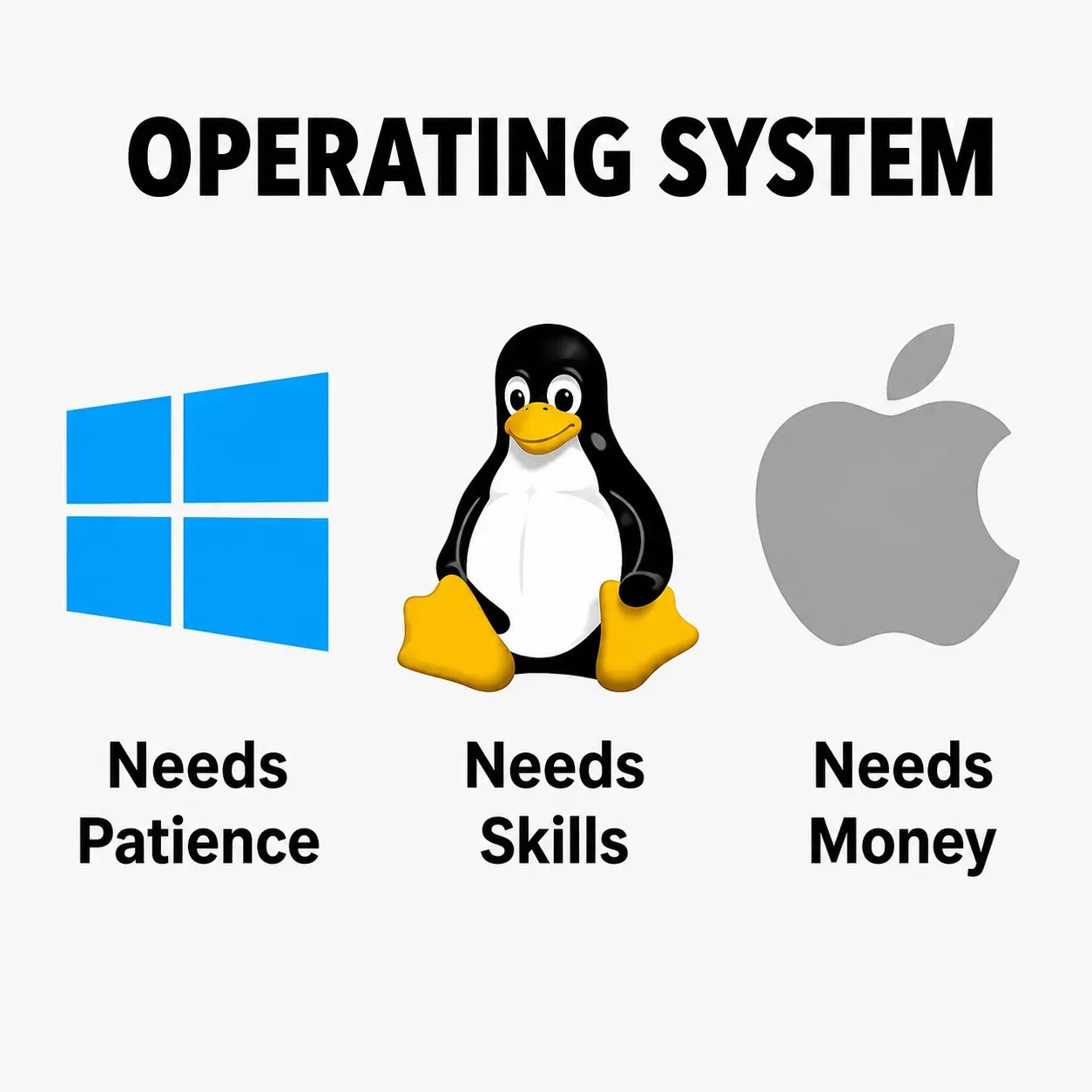
In 2026, all three operating systems are genuinely good. The honest answer is that the right OS depends entirely on what you're doing with it. If your work lives inside Microsoft 365 and you need broad software compatibility without thinking too hard, Windows makes practical sense. If you're in creative work and you're willing to pay the Apple tax for hardware-software harmony that's hard to match, macOS earns it. If you're a developer or sysadmin who wants full control over your environment and doesn't mind a learning curve, Linux, particularly Fedora or Ubuntu, deserves a serious look.
The OS wars of the early 2000s have mellowed into a grudging mutual respect among people who actually use these systems daily. Online, of course, they absolutely have not and long may that continue, because it gives us all something to argue about that isn't actually important.
Whatever you use: use what works for you, not what Twitter tells you to. Unless you use Arch. In which case, we know. You've mentioned it.
Like this kind of writing? The Ledgercross blog covers tech, software, and the things that actually matter to people who build things. Come back soon.